

Continuously serving Kosciusko County since 1854
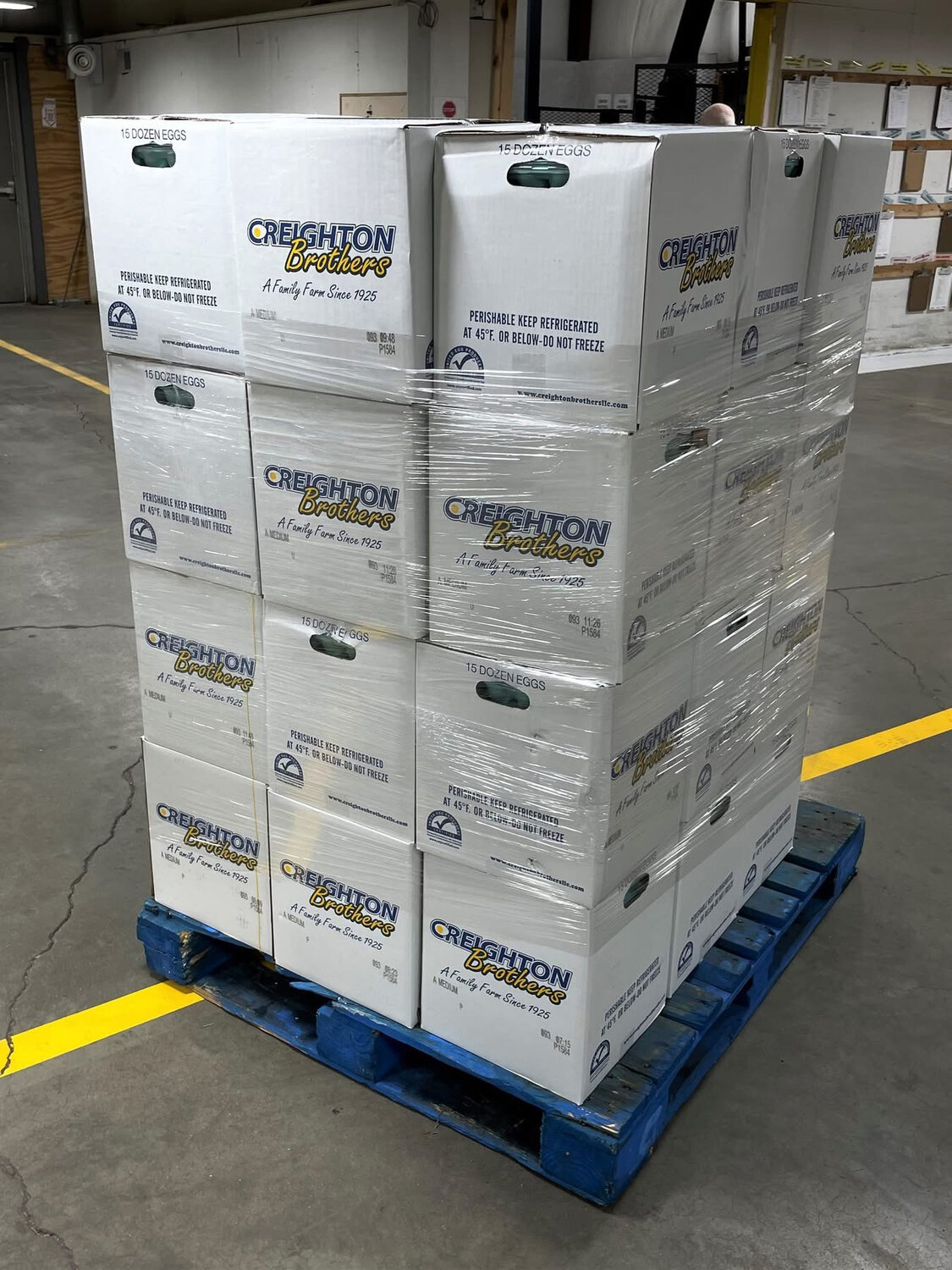
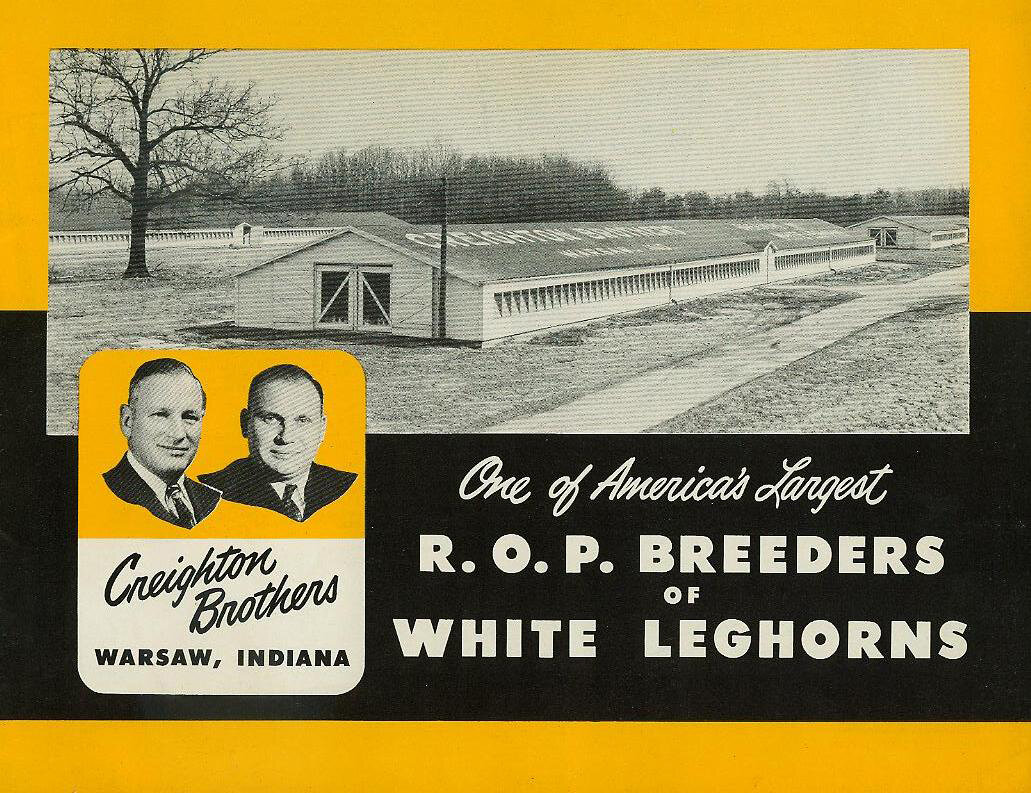
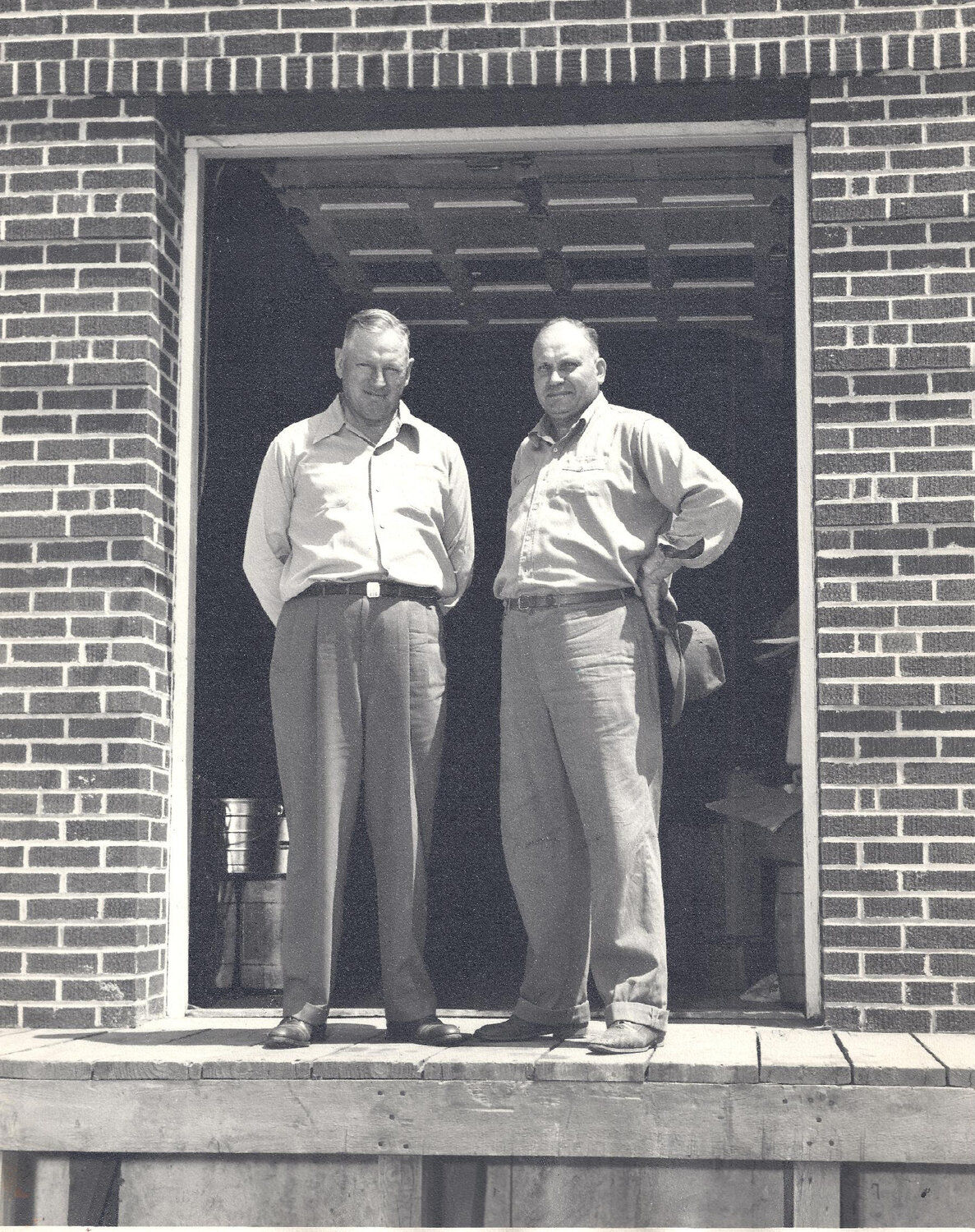


Creighton Brothers has grown over several generations from 1,200 pullets in 1925 to more than 3 million laying hens and 9,000 acres of farm ground today.
To celebrate the Kosciusko County family-owned business’ 100th anniversary, the theme of this year’s Mentone Egg Festival parade is “100 Years of Egg-cellence.” The festival is June 5-7, with the parade kicking off downtown Mentone at 11 a.m. Saturday, June 7.
In a recent interview at Creighton’s Crazy Egg Café & Coffee Bar, 4221 W. Old 30, Warsaw, Creighton Brothers President Mindy Creighton Truex said before 1925 her grandpa, Hobart Creighton, and his younger brother, Russell Creighton, had - with the help of their parents - bought some small hogs and were going to grow them out. By the time the hogs were ready, the bottom fell out of the hog market.
“So they were searching for what else they could do, and Grandpa had a good relationship with Chet Manwaring, from Mentone, so Grandpa and Chet talked about things. Chet talked him into buying some pullets, and the rest is history,” Truex said.
They got their 1,200 chicks and learned the “hard way” starting out about the chicken business. Hobart and Russell had some experience, but not a lot to make a business out of it. They got into genetics and many other things to make the best chicken out there that could not only lay a lot of eggs, but also have great stamina, livability and body commission.
A pullet is the female baby chicken until she reaches egg-laying age, at which time she becomes a hen, between 18 to 20 weeks.
“The Leghorn - the white Leghorn - is the chicken that kind of became popular because it was, even at that time, the go-to chicken breed for good egg-laying chickens, so that’s where they got started with that,” she said.
There were six Creighton siblings all together and all of them were offered the opportunity to come into the business, but it ended up just Hobart and Russell.
“They formed a partnership, an official partnership, pretty much right off the bat, probably if not the same year then within a year or two,” Truex said.
The partnership lived until about the late 1980s. She said her dad, Eddie Creighton, took her and his cousin, Gale Creighton, to the attorneys when they were looking at restructuring beyond that partnership.
“That original partnership was kind of amazing that, one, that they created such an official partnership back then and then for it to have lived and worked for as long as it did and still have the foundations of the way they wanted the partnership in terms of family ownership and different things. It’s still pretty much according to their intentions and what they wanted in the business,” she said.
Creighton Brothers started just south of the town of Atwood. There’s a grassy piece of ground, just before one gets to Crystal Lake, and on that ground is a huge boulder that’s inscribed.
“Dad had it etched because that was the original homeplace for my grandpa and grandma. And Grandpa and Uncle Russell built the house. They helped each other build their houses and they did that in 1923 when Grandma and Grandpa got married, and then in 1925 they had the live chicks in the basement and had another garage building that kind of turned into the hatchery building and office space,” Truex recalled.
While the business started out in the basement, it eventually moved out to another building. The Creighton office building and the building that now houses the Crazy Egg Café were built in the late 1940s. In the 1950s, the original feedmill was built.
“They had a lot of support from their parents, in terms of ground that they had,” she said.
Originally, Hobart and Russell did a lot on breeding, hatching and selling baby chicks. Selling eggs was a byproduct of the eggs that didn’t go into incubators.
“I’m sure they sold some locally. There wasn’t a lot of documentation for us on that to know that. But, they also - and why I feel like this area capitalized on being the ‘Egg Basket of the Midwest’ - it was just such a great area with our rail system here, because they would take eggs to like Atwood. There are stories about if Uncle Russell missed the train stop in Atwood, he would race his way down to Etna Green or Bourbon and catch them on their next stop to get eggs on the train to Chicago, and they would go up there to places that would dispense them around Chicago,” Truex said.
Back then, more people likely had their own personal chickens and eggs in the small communities so she wasn’t sure how many local groceries sold Creighton eggs.
“The exciting part about the rail system here is they could put eggs (on the train),” she said. “We did find documentation of things where they sent eggs to the New York markets by rail, where they could go to New York or Chicago here very easily by rail. So that’s what kind of helped in this area, having the mode of transportation to get them on to a bigger market.”
Back then, selling baby chicks was almost the bigger business than eggs. Marketing brochures had order forms in them for people to order their baby chicks. The chicks would be sent through the mail, delivered or people could pick their orders up.
Crystal Lake produces top-quality egg products for the food service and food manufacturing industries. Truex said Crystal Lake came about because there were eggs that weren’t going to go into the hatchery but also weren’t saleable as carton eggs.
“So they started hand-breaking them out and taking the whisk and whisking them up. They would take those and refrigerate them, and then they would put them on refrigerator cars and send them up to Chicago overnight. And that’s how Crystal Lake started because Crystal Lake does all of our egg products ... everything out of the shell,” she explained.
Now, Creighton Brothers has seven different egg-laying farms and three breeding farms. They do about 10,000 acres of primarily corn, but also some soybeans for field rotation. All of the corn is to feed the chickens.
“We might have anywhere from 50-60% on the low end if we don’t have as good a yield some years, all the way up to - if we just have optimum perfect growing conditions - we could get up to 70-75% of our needs that way. That still leaves us very dependent on our other area local farmers to buy corn,” Truex said.
It takes a lot of corn to feed the chickens.
“You need about a bushel of corn per hen. So, we’re usually looking at counting the pullets, as they’re growing, we would be looking for about 4 million bushels of corn a year to go through, just in corn. Then we sell the soybeans direct to, normally Louis Dreyfus, and then buy back soybean meal, that’s one of their byproducts,” she said.
Creighton Brothers still believes in vertical integration, having everything from the crops and feedmill to transportation and processing plant done in-house.
Their cage-free farm is just now getting populated, she said.
“This is a whole lot better than letting them all outside. The whole reason why chickens went in ... the reason why they got them off the floor and into cages and pens was so you could keep a better eye on them. So you could actually know, you saw every chicken, you know every chicken is okay and doing well,” Truex stated, noting you can tell how healthy a chicken is by the color of their legs.
The eggs also stay cleaner in the cages and pens, though all eggs are cleaned before they get to the end-user. In the cage-free environment, workers have to wear more protective gear like goggles because of how active the chickens get, especially in the mornings.
On the cage-free house, Truex said it’s brand new and their first one.
“They’ve come a long way in taking care of them in these housing systems and making them more, I guess, truly a technically cage-free. They don’t go outside because then they would be (free-range),” she said.
If chickens do go outside, then there’s concerns about outside predators, the weather, temperatures and more susceptibility to diseases. Even inside the chicken houses, the bird flu virus can get in on a speck of dust through ventilation.
“That’s one part, but we haven’t cracked the code yet on stopping that and that always seems to be more of the case than somebody walking it in on their shoes, although bio-security has gone from what we’ve ramped up to back in 2015,” Truex said.
Before Covid-19, Creighton Brothers employed around 250 people. That dropped to about 150, but is back to around 200.
“We also have a lot of technology that we’ve been trying to incorporate,” Truex said, showing a video of a packing system that picks up three stacks of eggs and puts them on a pallet. “So we can actually stack the eggs another layer higher because this can reach up to there, and then we kind of have the same thing, in a sense, in reverse that we have something that’s kind of more person-operated.”
They still have somebody overwatching everything.
“The robotics for us is not something to replace somebody, that would let somebody go, but it’s more to be able to fill a job that we can’t find somebody for to start with. So, it’s kind of to help fill in the gaps where we need people,” Truex said. People also deserve their time off to be with family and those sort of things, but robotics don’t get sick or need time off. “It’s a great side thing to be able to have that technology in there and to be able to afford to do those projects and things. It’s kind of nice right now where we can do those projects and work with new facilities and new equipment.”
On the next 100 years for Creighton Brothers, Truex said, “You just never know what’s around the corner. I’m sure whatever it is, it’ll be a challenge. Whatever we take on will be the best for the farm and the employees that are working here and everything. But, you just never know what tomorrow’s going to bring. ... From that standpoint, my grandpa was quite the visionary.”
Creighton Brothers possibly may have a community event in September to celebrate their 100 years. Look for details on that to be announced later.


