

Continuously serving Kosciusko County since 1854
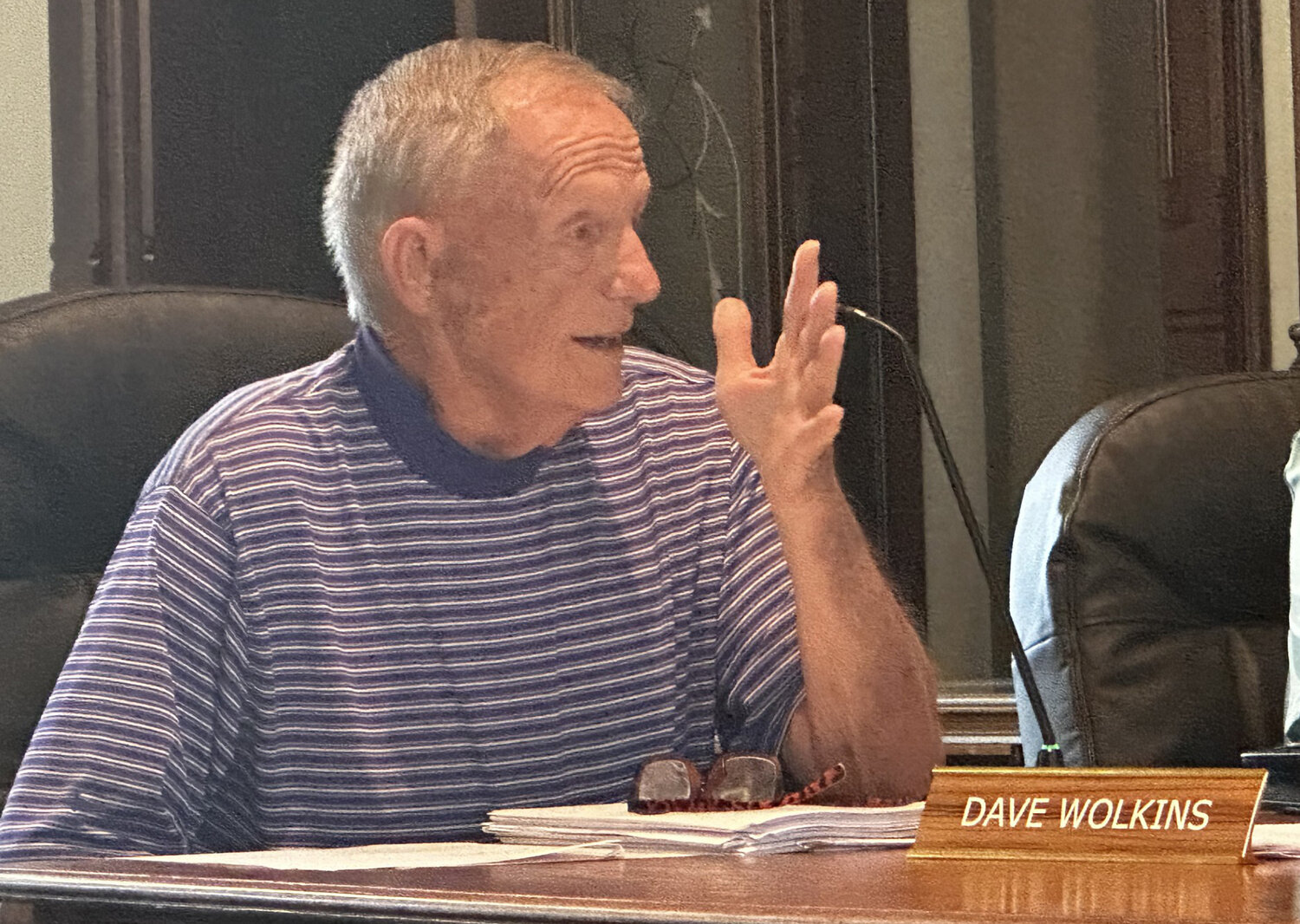
Slate Auto will get personal and real estate tax abatements after the Kosciusko County Council approved them by a 5-1-1 vote Thursday night.
Councilman Dave Wolkins voted against the tax abatements and Councilwoman Kathy Groninger abstained. There were no remonstrators from the public who spoke for or against them.
Attorney Steve Snyder, on behalf of ReCar Inc., doing business as Slate Auto, and Phoenix Warsaw Industrial Investors LLC, which owns the former Donnelley real estate at 2801 W. Old 30, Warsaw, presented the declaratory resolution and abatement request to the council at their May 8 meeting.
He was back Thursday night to present the confirmatory resolution, asking the council to approve the abatements.
“Last month, you listened to the presentation of what is proposed for the use out there. There have been a couple meetings since then. Then have been meetings of the (county’s) abatement committee, and I think we have resolved most of the issues that were raised in the period between the preliminary hearing and tonight’s hearing,” Snyder said.
Recapping the request, he said there were two requests for 10-year abatements - one for personal property improvements totaling $303,166,831, comprised of machinery of roughly $255 million, logistics equipment of $34 million and IT equipment for $14 million; and real estate improvements at this stage planned to be $59,085,106. Total of both personal property and real estate improvements is $362,251,937.
“As you heard last month, the proposed number of employees is approximately 1,700 new jobs created by the presence of Slate in that building. Since that time, there has been a decision by Slate to bring in-house the manufacturing of the seats for the truck that will be produced at this facility. That will likely generate another 120 jobs, so we’re getting close to that 1,800 number of total new jobs to be created,” Snyder said.
The actual salaries for the additional seat employees is yet to be determined. The salaries for the initial 1,700 employees expected to be hired by Slate total over $93 million.
“We tried to put together calculations ... of what the effect will be on the revenue of the county, even after an abatement over a 10-year period is approved,” Snyder said.
Current real estate taxes payable on the property annually are $201,000. Current personal property tax on the property is $23,635.
“If you look at the anticipated additions to both personal property and real property, the base stays the same - we have to make that assumption that there’s always going to be roughly $200,000 generated by what’s there. Now, however, if you think about that, if it remains vacant for any extended period of time, the value of that property decreases and the tax revenue goes down. But let’s just make the assumption that $200,000 continues and that personal property tax at the current rate continues. Those aren’t abated. What is abated are the additions to both real estate and personal property, provided directly by Slate, either directly for manufacturing equipment or on behalf of Phoenix Warsaw, the owner of the property through the lease,” Snyder explained.
At the end of the abatement, he said the new tax goes from $36,000 to $731,000 at the end of the abatement, which is a significant increase for personal property.
If the tax rates and the assessed values stay essentially the same, plus the additions, Snyder said the new personal property tax will go from $117,968 now to $1,407,825 at the end of the abatement period, assuming the projected values remain the same.
“So if you do a comparison over that 10-year period, from a personal property standpoint, if there are no improvements, the county receives - at today’s rates - $230,635. And, on real estate, you would receive, over that 10-year period, $2,113,620,” Snyder said. “With the improvements, there’s a significant change. The tax revenue, even after abatement, for personal property received by the county would be $7,534,713. And for real estate would be $5,409,039. Those are based on the original abatements. The new abatement schedule - 100, 90, 80, that you requested - is also based upon current values and anticipated additions to both personal property and real property.”
Snyder requested the council adopt the confirmatory resolution “confirming the declaration of the Economic Revitalization Area for this 189 acres and the building, to approve the 10-year abatement for both real estate and personal property utilizing your recommended abatement schedule, beginning at 100% and decreasing 10% each year over that 10-year period.”
Council President Tony Ciriello opened the hearing up to the public on the confirmatory resolution but no one stepped forward.
After closing the hearing, Ciriello said, “The abatement committee did make a counteroffer with Slate on the abatement schedule, which they accepted. The abatement schedule that the abatement committee took back to them was in line with the Department of Local Government Finance (DLGF) recommendations on abatements. Slate did accept that, and there were a few other questions they did answer for us that made a difference.”
He said by going with the DLGF schedule instead of the original schedule Slate proposed, over the period of the next 10 years the county will gain an additional $1 million in tax revenue that it wouldn’t have gained under the original schedule.
Councilman DeLynn Geiger made a motion to approve the confirmatory resolutions for both of the tax abatements. Councilwoman Kimberly Cates seconded the motion.
Before a vote took place, Wolkins expressed the concerns he had about the whole process.
“Number one, some of the assumptions they’re making - $7,500 current credit is in the ‘Big Beautiful Bill,’ I think that’s going to go away. Another assumption they’re making is they’re going to be able to sell or lease these (EV trucks) direct, and I can almost bet you that’s not going to happen in Indiana. If they’re produced in Indiana, it’s going to be a real problem for you,” Wolkins stated.
He said he hopes Slate is successful, but “if you look at the number of startup EV companies that are going bankrupt - and they had been financed very well, this one is financed very well. I think it was announced they had $700 million investment at the end of May. All of the others are trying to produce similar things, so if you take your $27,000 car, if they lose the abatement, I don’t think they’re going to sell a whole lot of these in Arizona and New Mexico and Texas without air conditioning. You start adding all the little things on, you’re going to be well over $30,000, which makes it very competitive to the Ford Maverick and everything else.”
Wolkins said he would love to see an abatement that rewarded Slate if they’re still in business in five years.
“I hope they’re successful, the whole thing, but the track record of these EV companies is not very good,” he said.
The past administration loved them, but Wolkins said it’s a niche market and he thinks Slate will have great sales on the East and West Coasts “and Bloomington, Indiana,” but he said he wasn’t convinced Slate will be around in five or six years.
He said Slate wasn’t coming to Warsaw because of the county’s tax abatement but because of the amount of money the state was putting into it, which he was unable to ascertain. Wolkins said he had no problem “on the total money that we’re going to pay giving them that,” but he wanted to give that to them the last five years and not the first five years.
He said the county was losing out on $30 million of potential tax revenue. He also said he didn’t think the country was going toward electricity for vehicles.


